



















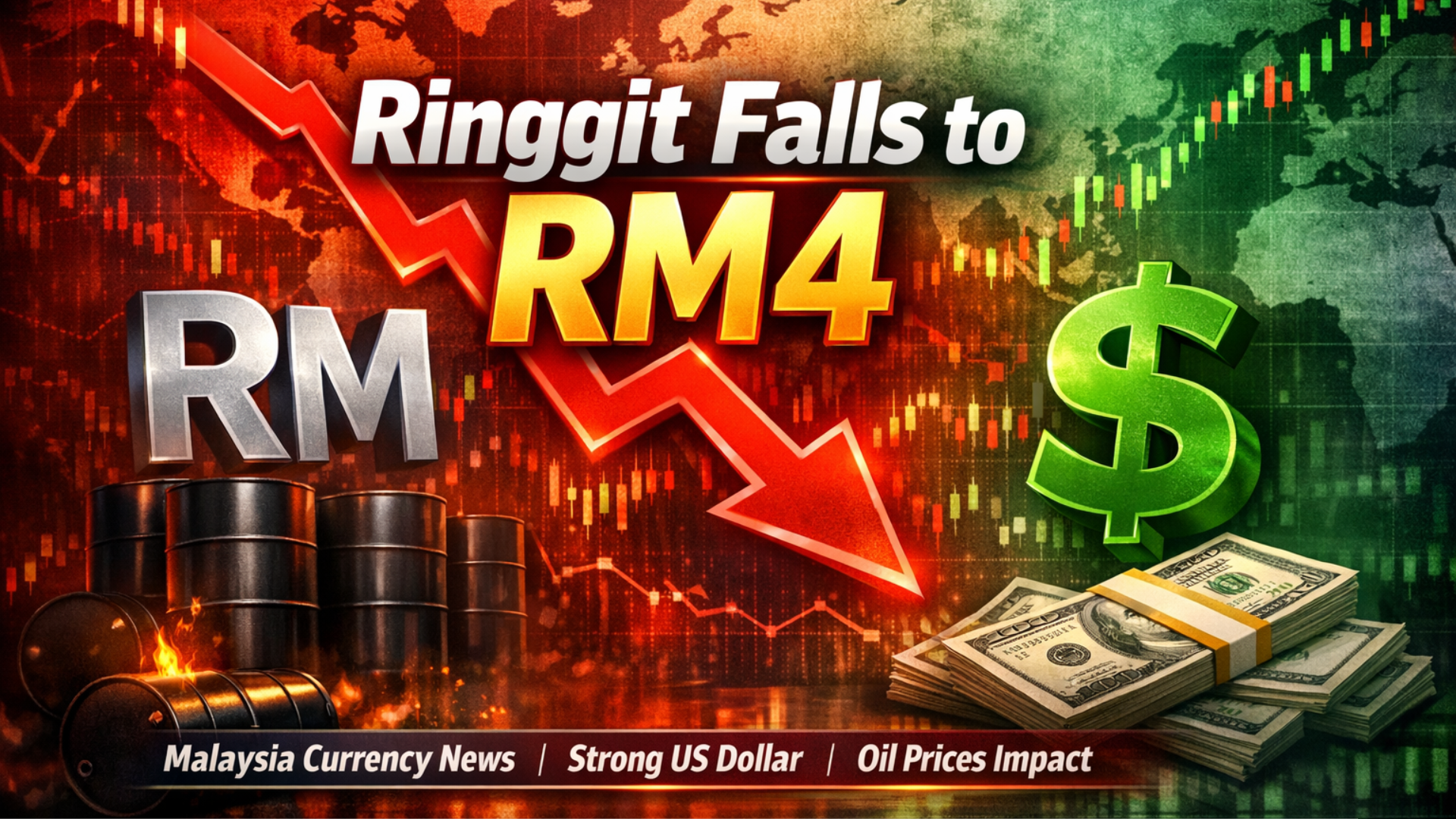
Malaysia’s ringgit has slipped back toward the RM4.00 level against the US dollar after holding strong below this mark for nearly two months. The sudden weakness comes as global uncertainty rises, driven by geopolitical tensions in West Asia, higher oil prices, and a stronger US dollar.
Earlier this year, the ringgit showed impressive performance, climbing to around RM3.88 in February—its highest level in over a decade. However, the positive momentum began to fade in March as investors turned cautious.
One of the biggest reasons behind this shift is the growing demand for safe-haven assets. During times of uncertainty, global investors prefer to hold the US dollar, which is seen as more stable. At the same time, expectations that the US Federal Reserve will keep interest rates high have further strengthened the dollar.
Rising oil prices, which have crossed US$100 per barrel, have also added pressure. While Malaysia is an oil-exporting country, higher prices are increasing costs such as fuel subsidies, reducing the overall benefit. As a result, the ringgit is expected to remain under pressure in the near term.
Ringgit Ends Strong Rally Phase
The local currency had maintained a solid position below RM4.00 for nearly 60 days, even reaching a high of around RM3.88 in late February—its strongest level in over a decade. This rally was supported by a weaker US dollar, steady domestic economic fundamentals, and strong foreign inflows.
However, the trend reversed in early March as geopolitical risks escalated, particularly due to conflict in West Asia. The ringgit quickly lost momentum and crossed the RM4.00 mark, signaling a shift in market sentiment.
Safe-Haven Demand Boosts US Dollar
Investors have increasingly turned to the US dollar as a safe-haven asset amid uncertainty. This shift has placed downward pressure not only on the ringgit but also on other regional currencies.
The rising demand for the dollar is further supported by expectations that the US Federal Reserve will maintain a hawkish stance. With inflation concerns intensifying due to elevated oil prices, markets are pricing in prolonged higher interest rates in the United States.
Oil Prices Add to Market Volatility
Global oil prices have surged above US$100 per barrel due to supply concerns linked to disruptions around the Strait of Hormuz. While higher oil prices typically benefit commodity-linked currencies like the ringgit, the current scenario is different.
Instead of supporting the ringgit, expensive oil is strengthening the US dollar, as investors prioritize liquidity and safety over riskier assets. At the same time, higher oil prices are increasing Malaysia’s fiscal burden through fuel subsidies and import costs.
Regional Currencies Also Under Pressure
The ringgit’s weakness is part of a broader regional trend. Other currencies, including the Singapore dollar, Japanese yen, euro, and British pound, have also shown declines against the US dollar.
Similarly, ASEAN currencies such as the Thai baht, Indonesian rupiah, and Philippine peso have faced depreciation, reflecting widespread risk aversion in global markets.
Outlook: Ringgit Likely to Stay Near RM4
Analysts expect the ringgit to hover around the RM4.00 level in the near term. Continued geopolitical tensions, sustained high oil prices, and a strong US dollar are likely to keep the currency under pressure.
Experts suggest that unless global conditions improve—such as easing conflicts or a shift in US monetary policy—the ringgit’s recovery may remain limited.
Key Risks Ahead
- Prolonged West Asia conflict
- Continued rise in global oil prices
- Strong US dollar dominance
- Domestic fiscal pressures from subsidies
*************
While the ringgit’s recent weakness is largely driven by external factors, its future trajectory will depend on global economic stability and Malaysia’s ability to maintain strong fiscal and external balances. For now, the currency is expected to remain volatile, with RM4.00 acting as a key psychological level in the market.
**************
Read News Article: https://across99.com/category/news/