



















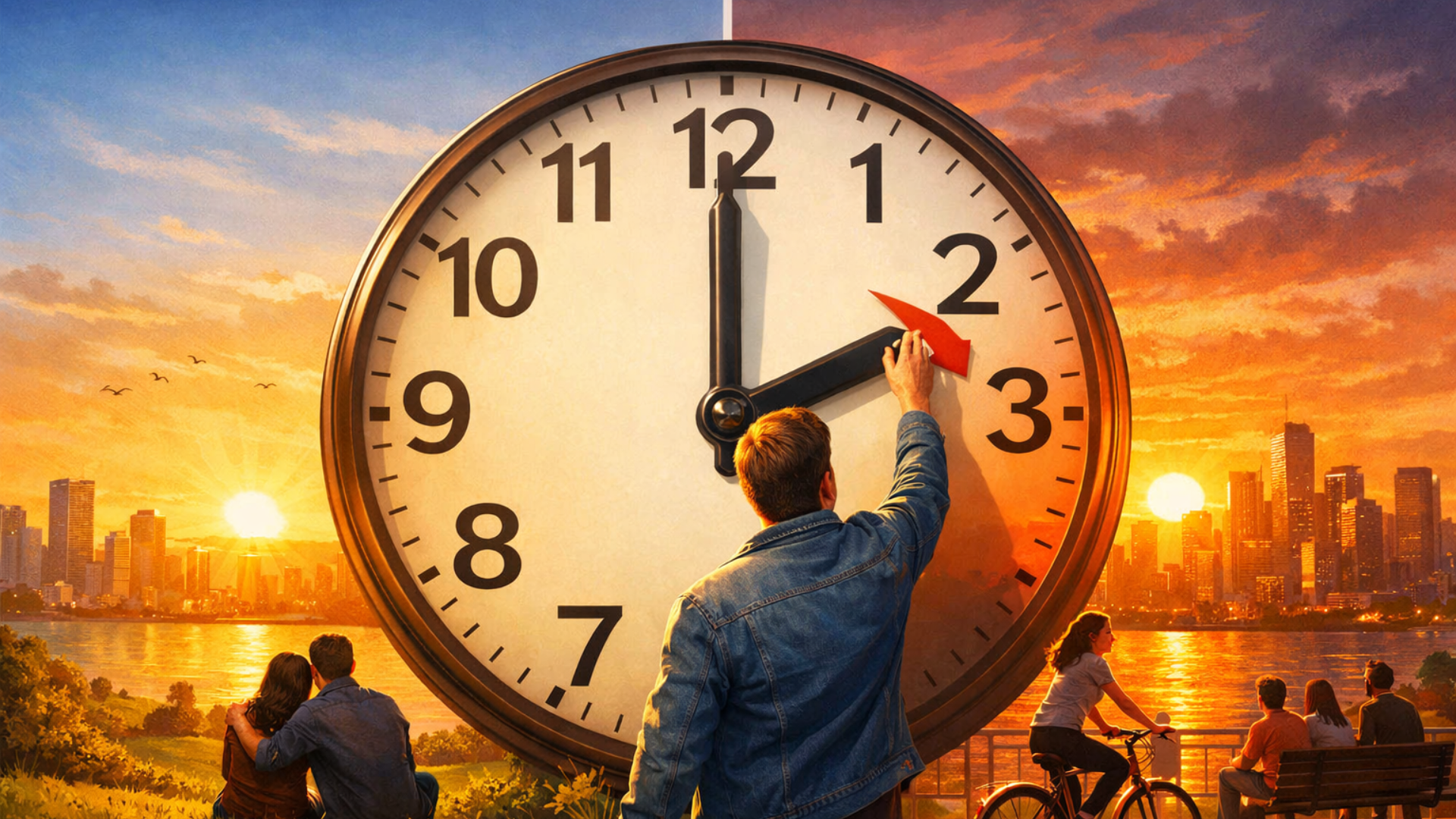
Daylight Saving Time (DST) is a system used in many countries to make better use of natural daylight. Every year, millions of people adjust their clocks with the familiar phrase “spring forward, fall back.” On 29 March 2026, the UK once again moved clocks forward by one hour, officially starting Daylight Saving Time (DST). This system is designed to shift an hour of sunlight from the morning to the evening, allowing for longer daylight hours after work and daily activities.
The idea behind Daylight Saving Time is simple. By having more daylight in the evening, people can enjoy longer outdoor activities, reduce the need for artificial lighting, and potentially save energy. In the UK, clocks move forward in March and return to normal in October, switching between Greenwich Mean Time (GMT) and British Summer Time (BST).
However, despite its long history, DST remains controversial. Critics argue that the benefits are now minimal in modern society, while the drawbacks—especially health-related issues—are becoming more noticeable. Even losing one hour of sleep can disrupt the body’s internal clock, causing fatigue, reduced concentration, and irritability.
As discussions continue worldwide, many countries are questioning whether Daylight Saving Time is still relevant in today’s fast-changing world.
What Is Daylight Saving Time?
Daylight Saving Time is the system of moving clocks forward in spring and back in autumn to make better use of natural daylight.
- Begins: Last Sunday of March
- Ends: Last Sunday of October
- Time change: +1 hour in spring, −1 hour in autumn
In the UK, this means switching from Greenwich Mean Time (GMT) to British Summer Time (BST).
The idea is simple—more daylight in the evening, less in the morning.
Why Was Daylight Saving Introduced?
Contrary to popular belief, DST was not created for farmers.
- In the 1890s, New Zealand scientist George Hudson suggested adjusting clocks to enjoy more evening sunlight.
- Later, British inventor William Willett promoted the idea in 1907 through his pamphlet “The Waste of Daylight.”
- The system was first implemented by Germany in 1916 during World War I to conserve energy.
- The UK adopted it shortly after.
Impact on Health: Is Losing One Hour a Big Deal?
Losing just one hour of sleep may seem minor, but research suggests otherwise.
Effects on the Body and Mind
- Increased fatigue and irritability
- Disrupted sleep cycles
- Reduced concentration
Sleep experts say even a small sleep loss can affect the brain’s emotional center, making people feel more stressed or sensitive.
Health Risks Linked to DST
Studies have shown:
- A rise in heart attack cases shortly after the spring time change
- Increased risk of stroke in the days following the shift
These findings suggest that sudden time changes can put temporary stress on the body.
Mental Health Concerns
Time changes can also affect mental well-being.
- Shorter daylight hours in winter may worsen seasonal depression (SAD)
- Disrupted sleep patterns can lead to mood swings
- Reduced sunlight exposure can increase feelings of isolation
Should Daylight Saving Time Be Abolished?
The debate over DST has intensified in recent years.
Arguments for Scrapping DST
- Negative impact on sleep and health
- Disruption to daily routines
- Minimal modern-day energy savings
Organizations like sleep research groups have even recommended ending clock changes permanently.
Global Perspective
- Only about one-third of countries use DST
- Some regions, like Arizona and Hawaii, do not follow it
- Countries like Iceland avoid DST due to extreme daylight variations
Efforts in Europe to abolish DST have been discussed but not fully implemented.
How to Adjust to Clock Changes
Experts suggest a few practical ways to cope with the time shift:
Before the Change
- Get extra sleep in the days leading up
- Gradually adjust bedtime
After the Change
- Spend time in natural morning sunlight
- Avoid caffeine late in the day
- Maintain a consistent sleep schedule
The “Golden Rule” of Napping
- Keep naps between 20–60 minutes
- Avoid napping within 6 hours of bedtime
This helps your body rebuild natural sleep pressure.
…………………..
Daylight Saving Time has been part of modern life for over a century, but its relevance is increasingly questioned. While it offers brighter evenings and lifestyle benefits, the health drawbacks and limited advantages are pushing many to reconsider its future.
Whether DST stays or goes, one thing is certain—the debate is far from over.
*********
Read News Article: https://across99.com/category/news/