



















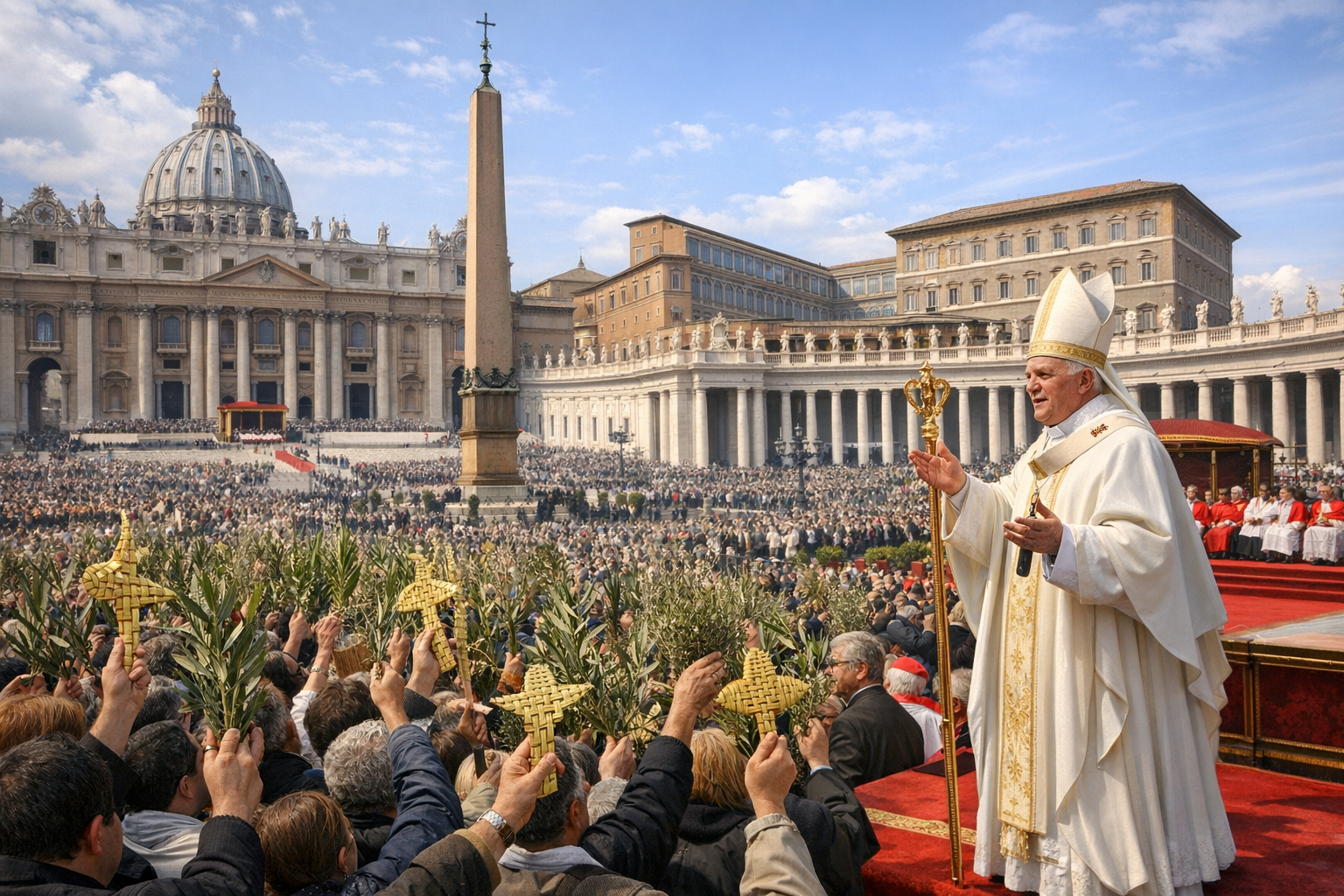
Vatican Palm Sunday 2026 at the St. Peter’s Square brought together faith, history, and a powerful message for today’s world. Thousands gathered as Pope Leo XIV led his first Holy Week celebration, marking an important moment for the global Christian community.
The ceremony began with a traditional procession of worshippers carrying olive branches and intricately woven palm leaves, symbolizing peace and devotion.
At the center of the square stands the ancient obelisk, a silent witness to centuries of history, including the time of the Roman emperor Caligula and the martyrdom of early Christians such as Saint Peter. This connection between past and present gives the Palm Sunday celebration deep spiritual meaning.
During his address, Pope Leo XIV delivered a strong message against war, emphasizing that God represents peace, not violence. He urged people around the world to reject hatred and pray for those suffering in conflict zones. The occasion also carried emotional weight, as many remembered Pope Francis and his final appearance during last year’s Holy Week.
A Ceremony Rooted in History
The Palm Sunday procession began with worshippers carrying olive branches and beautifully woven palm leaves. As tradition continues, the ceremony moved around the towering Egyptian obelisk at the center of the square.
This monument is more than decorative—it stands on ground once used by the Roman emperor Caligula for public spectacles, where early Christians, including Saint Peter, were believed to be martyred.
Even the obelisk itself has a dramatic story. In the 16th century, Pope Sixtus V ordered it to be moved to its current position. During the risky operation, a sea captain named Benedetto Bresca saved the structure from collapse by shouting advice that strengthened the ropes—an act that earned him a lasting place in Vatican tradition.
Pope Leo XIV’s Strong Message Against War
While the ceremony honored history, Pope Leo XIV used the moment to address today’s global conflicts.
He clearly stated that no one should use religion to justify violence, describing Jesus as the true “king of peace.” His message comes at a time of ongoing tensions, including conflicts involving Iran, Israel, Russia, and Ukraine.
He also expressed concern for Christians in the Middle East who are unable to fully celebrate their faith due to war and instability, urging the world to pray for peace and reconciliation.
Remembering Pope Francis’ Final Days
This year’s Holy Week also brought emotional memories of Pope Francis.
Despite serious illness, Francis made a final appearance during Easter last year, greeting the faithful in St. Peter’s Square. In what became his last public moment, he took a ride through the crowd before passing away the following day.
His legacy of humility and service continues to influence the Church and its direction.
A Balance Between Tradition and Change
Pope Leo XIV is continuing many traditions while also restoring some older practices. One major change is bringing back the Holy Thursday foot-washing ceremony to the St. John Lateran, its traditional location.
This ritual, inspired by Jesus washing his disciples’ feet, represents humility and service—core values of Christianity.
Upcoming Holy Week events include:
- Good Friday procession at the Colosseum
- Easter Vigil with baptisms
- Easter Sunday Mass and blessing at the Vatican
A Message That Goes Beyond Religion
Vatican Palm Sunday 2026 was not just about tradition—it carried a message for the modern world. From honoring early Christian martyrs to addressing current global conflicts, the event highlighted the importance of peace, compassion, and unity.
As Pope Leo XIV begins his leadership during this important week, his message is clear: faith should bring people together, not divide them.